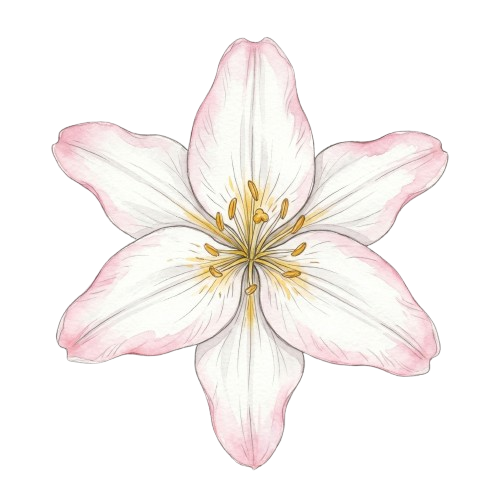
Get-well bouquets often go wrong because the tone becomes too upbeat too quickly. A person in recovery may not want to be urged to "bounce back." They usually want acknowledgment, softness, and no pressure to perform gratitude.
Flower logic
Lily is a reliable lead because it creates space. Lotus adds gentle hope without becoming sentimental. Daisy stops the overall arrangement from feeling distant or ceremonial.
This combination avoids the common problem of get-well bouquets that feel accidentally festive. There are no tulips urging energy, no peonies implying celebration. The overall effect is calm, patient, and genuinely supportive rather than performatively cheerful.
Message direction
A strong note for this bouquet is short and low-demand. It should let the recipient know you are present without asking them to answer, reassure you, or adopt a forced positive mindset.
Resist the temptation to predict how quickly they will recover. Phrases like "You'll be back on your feet in no time" can feel dismissive of what the person is actually going through. The goal is presence, not motivation.
More message examples
Different recovery situations need different notes. Here are four variations:
Low-demand and open (works for illness, injury, or exhaustion): "No need to reply to this. I just wanted you to know I'm thinking about you and that there's no rush on anything."
For a longer recovery period (works when the person has been dealing with something for weeks): "I know this has been going on longer than anyone wants. I'm not going anywhere, and neither is my patience. Rest as much as you need."
For someone who is frustrated by the recovery itself (works when the person is independent and dislikes being slowed down): "I know waiting is the hard part. I wanted to send something quiet — no pressure, no timeline, just me thinking of you."
For a family member (works when the relationship is close and the tone can be a little warmer): "Take all the time you need. We're all here, and we're not worried — we just want you to rest."
How to build this in DigiBouquet
Follow these steps in the builder to recreate this bouquet:
- Flowers: Add lily first to anchor the arrangement. Then add lotus for the second layer and finish with daisy. This sequence keeps the emotional arc from calm to hope to warmth.
- Greenery: Choose "Leafy," which is the greenery encoded by this page's inspectable example link.
- Card template: Select "Watercolor Wash." Its pale painted surface supports the calm tone without inventing a template that is not available in the builder.
- Message: Keep it short. Two to four sentences is usually enough. Use the examples above or write something similarly low-pressure.
- Background: Choose "Soft Blush," the background encoded by the example link.
Send it during a quiet time you know suits the recipient. Do not assume evening is best if their schedule, treatment, or rest pattern suggests otherwise.
Alternative combinations
For a more hopeful tone (when the person is improving and ready for a gentler kind of encouragement): Replace daisy with orchid. The arrangement becomes slightly more elegant and forward-looking while still staying calm.
For emotional recovery rather than physical (when the person is dealing with grief, burnout, or a difficult period): Keep lotus as the lead flower, then use camellia and lily as the two supporting flowers. The valid three-flower arrangement remains quiet without turning recovery into a promise or diagnosis.